
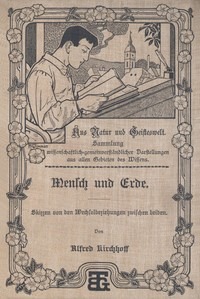
Mensch und Erde: Skizzen von den Wechselbeziehungen zwischen beiden by Kirchhoff
Forget a traditional plot. 'Mensch und Erde' is a series of thoughtful sketches, a 19th-century geographer's attempt to map the relationship between people and the planet. Alfred Kirchhoff takes us on a tour of Earth's features—its mountain ranges, river systems, and climate zones—and asks a simple, powerful question: how did this physical stage shape the play of human history and culture?
The Story
There's no hero's journey here. Instead, Kirchhoff builds his case piece by piece. He shows how a river isn't just water; it's a highway, a border, a source of life that dictates where cities rise. He argues that the spirit of a mountain people is different from that of plains dwellers, not by accident, but because of the land itself. The 'story' is the unfolding revelation of Earth as the silent, fundamental co-author of everything we've built.
Why You Should Read It
I loved the quiet confidence of it. This isn't a dry textbook; it's a wise, patient argument. Reading it feels like sitting with a brilliant old professor who points at a map and makes you see the world completely differently. In our age of climate change, his core idea—that we are inseparable from our environment—hits harder than ever. It’s a foundational text that makes you appreciate the deep, physical roots of human societies.
Final Verdict
Perfect for curious minds who love history, geography, or big ideas about humanity's place in nature. It's for the reader who enjoys classic, thoughtful non-fiction and doesn't mind a slower, more reflective pace. If you've ever looked at a landscape and wondered 'why here?', Kirchhoff's sketches offer a profoundly satisfying framework for finding answers.
This historical work is free of copyright protections. You can copy, modify, and distribute it freely.
Robert Williams
6 months agoEssential reading for students of this field.
Joseph Johnson
1 year agoI have to admit, the narrative structure is incredibly compelling. A true masterpiece.
Emily Smith
8 months agoEnjoyed every page.
Paul Davis
3 months agoWow.

Jennifer Hernandez
1 year agoI stumbled upon this title and the clarity of the writing makes this accessible. Don't hesitate to start reading.