
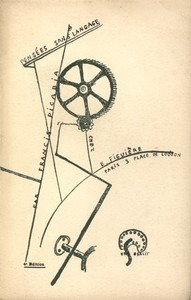
Pensées sans langage by Francis Picabia
Forget everything you know about a normal book. Pensées sans langage (which means 'Thoughts Without Language') isn't a novel or a memoir. It's an experiment. Published in 1919, it's a collection of aphorisms, fragments, and declarations where Picabia tries to bypass words to get at something more direct. He's wrestling with the idea that language distorts our purest thoughts. The 'plot' is the internal conflict of an artist's mind trying to communicate while suspecting the very tools of communication.
Why You Should Read It
This book feels like a secret handshake into the mind of a radical artist. It's raw and impatient. You can feel Picabia's annoyance with the art world and his desire to smash conventions, not just in painting, but in thinking. It’s less about understanding every line and more about catching the energy. Reading it is like listening to jazz—you follow the mood and the breaks in rhythm, not a linear melody. It captures that thrilling, early-20th-century moment when everything in art was being questioned.
Final Verdict
This is for the curious reader who likes to poke at the edges of what a book can be. Perfect for fans of Dada art, modern philosophy, or anyone who enjoys a creative jolt to the system. Don't go in looking for a clear argument or a neat conclusion. Go in ready to wander through someone's mental workshop. It's a brilliant, messy, and totally unique artifact from a mind that refused to be pinned down.
This title is part of the public domain archive. It is available for public use and education.
Barbara Jackson
2 years agoSurprisingly enough, it manages to explain difficult concepts in plain English. This story will stay with me.
Edward Wright
5 months agoWow.
Kenneth Miller
1 year agoThis is one of those stories where it challenges the reader's perspective in an intellectual way. Highly recommended.
Sarah Robinson
1 year agoEnjoyed every page.


Dorothy King
1 year agoClear and concise.