
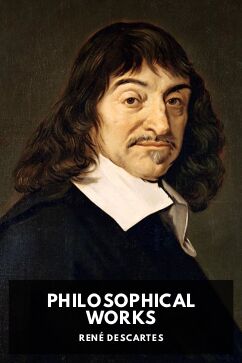
Philosophical Works - René Descartes
This isn't a novel with a plot in the usual sense. There's no hero's journey, unless you count the journey of a single mind trying to find solid ground. Think of it as the ultimate intellectual detective story, where the mystery is 'What can I truly know?'
The Story
Descartes begins by throwing everything into question. What if an evil demon is tricking all your senses? What if you're just a brain in a vat dreaming this whole life? He systematically doubts the evidence of his eyes, ears, and even basic math. He finds his one certainty in the act of doubting itself: to doubt, you must think, and to think, you must exist. 'I think, therefore I am' becomes his foundation stone.
From there, he works his way outward. He argues that the idea of a perfect, infinite being (God) must have been put in him by God, proving God's existence. A good God wouldn't deceive him about the physical world, so the world must be real. Finally, he grapples with the mind-body problem—how our non-physical thoughts interact with our physical bodies—and lands on the pineal gland as the connection point (science has moved on from this, but the question remains fascinating).
Why You Should Read It
You should read this because it's the birthplace of modern Western thought. It's where the 'self' and individual reason became the center of the philosophical universe. Reading it feels like being in the room while someone invents a new way of thinking. Yes, some arguments feel clunky today (the proof for God is a big one for many modern readers), but the sheer audacity of the project is thrilling. It's less about agreeing with every conclusion and more about witnessing a masterclass in rigorous, step-by-step thinking. It teaches you how to question your own assumptions.
Final Verdict
This book is perfect for curious thinkers, science fiction fans who love 'what is real?' scenarios, and anyone who's ever wondered where our modern focus on the individual and skepticism came from. It's not a light read—you'll need to go slow and really sit with the arguments. But if you're up for a challenge that will permanently alter how you see your own mind, this foundational text is absolutely worth the effort. Skip it if you're looking for a straightforward narrative, but embrace it if you want to wrestle with ideas that shaped our world.
This text is dedicated to the public domain. Knowledge should be free and accessible.
Liam Taylor
1 year agoFrom the very first page, the flow of the text seems very fluid. Absolutely essential reading.
Liam Lee
1 year agoText is crisp, making it easy to focus.
Melissa Perez
1 year agoI started reading out of curiosity and the storytelling feels authentic and emotionally grounded. Absolutely essential reading.
Richard Miller
1 year agoAfter finishing this book, the depth of research presented here is truly commendable. Exceeded all my expectations.


Betty Martin
2 months agoHaving read this twice, the plot twists are genuinely surprising. A true masterpiece.