
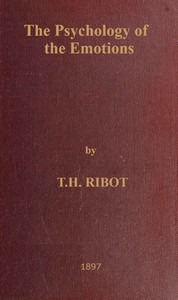
The Psychology of the Emotions by Th. Ribot
Let's be clear: this isn't a novel. There's no plot twist or main character, unless you count the human mind itself. 'The Psychology of the Emotions' is Ribot's attempt to map the uncharted territory of our feelings. He systematically breaks down different emotions—from the basic ones like fear and joy to more complex social feelings. His central argument is that emotions aren't just floating in our ether; they are built from physical sensations and are rooted in our nervous system. He explores how they develop, how they can become disordered, and how they shape everything we do.
Why You Should Read It
Reading Ribot today is like getting a backstage pass to the birth of modern psychology. You see the raw materials thinkers were working with before Freud became a household name. His focus on the physical body as the source of emotion feels surprisingly contemporary, cutting against the grain of purely philosophical explanations of his day. It's humbling and exciting to watch these foundational ideas being laid out. You'll constantly find yourself thinking, 'Oh, so *that's* where that concept started!'
Final Verdict
This book is a must for psychology nerds, history of science buffs, or anyone who loves seeing how big ideas begin. It's not a casual bedtime read—the language is academic and of its time—but it's incredibly rewarding if you're patient. Think of it less as a manual for your emotions and more as an important historical document. You're not just reading about feelings; you're witnessing the moment we started to take them seriously as a science.
This work has been identified as being free of known copyright restrictions. It is available for public use and education.
Nancy Moore
1 year agoVery helpful, thanks.
George Wright
1 year agoFrom the very first page, the character development leaves a lasting impact. A true masterpiece.
Dorothy Allen
6 months agoGood quality content.
Steven Harris
3 months agoVery interesting perspective.





Sandra Wilson
1 year agoVery interesting perspective.