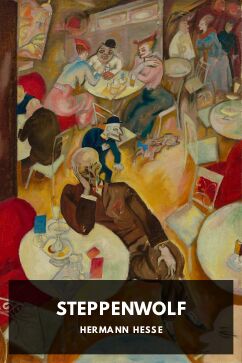
Steppenwolf - Hermann Hesse
Harry Haller is a man at war with himself. In his late 40s, he's a cultured scholar who loves Mozart and Goethe, but he feels a savage, lonely 'wolf of the steppes' snarling inside him. He despises the comfortable bourgeois life around him, yet he's not free from it. He's stuck, miserable, and considering a drastic way out.
The Story
The story kicks off when Harry finds a strange pamphlet titled 'Treatise on the Steppenwolf.' It's a clinical analysis of a man exactly like him, describing his divided soul not as two parts, but as hundreds. This shocks him. Soon after, he meets Hermine, a sharp, intuitive young woman in a bar. She sees right through his tortured artist act. She makes a deal with him: she will teach him to dance, to enjoy life's simple pleasures, and in return, he must fall in love with her. Through Hermine and her friends, like the saxophonist Pablo, Harry is dragged into a world of sensuality, music, and connection he thought was beneath him. The journey culminates in the legendary 'Magic Theater'—a surreal, drug-fueled hall of mirrors where Harry confronts all the fragmented pieces of his identity, his desires, and his fears.
Why You Should Read It
This book grabbed me because it's so brutally honest about the mess of being human. We all wear masks and play roles—the professional, the friend, the responsible adult. Hesse tears that apart and asks: what's left? The 'Magic Theater' scene is one of the most mind-bending things I've ever read. It's not just a plot device; it's a metaphor for psychotherapy, for peeling back the layers of the self. It's chaotic, confusing, and brilliant. Hermine is a fantastic character, not a love interest in a traditional sense, but a mirror and a guide. She calls Harry on his self-pity and shows him there's more to life than lofty thoughts.
Final Verdict
This isn't a light beach read. It's for anyone who's ever felt out of step with the world, who questions their own contradictions, or who is navigating a personal crisis or midlife reevaluation. It's perfect for fans of philosophical fiction that doesn't have all the answers but asks the big, uncomfortable questions. If you liked the inner turmoil of Crime and Punishment or the surreal exploration of self in Fight Club, you'll find a kindred spirit in the Steppenwolf. Be prepared for a strange, challenging, and ultimately rewarding trip into the human psyche.
No rights are reserved for this publication. Share knowledge freely with the world.